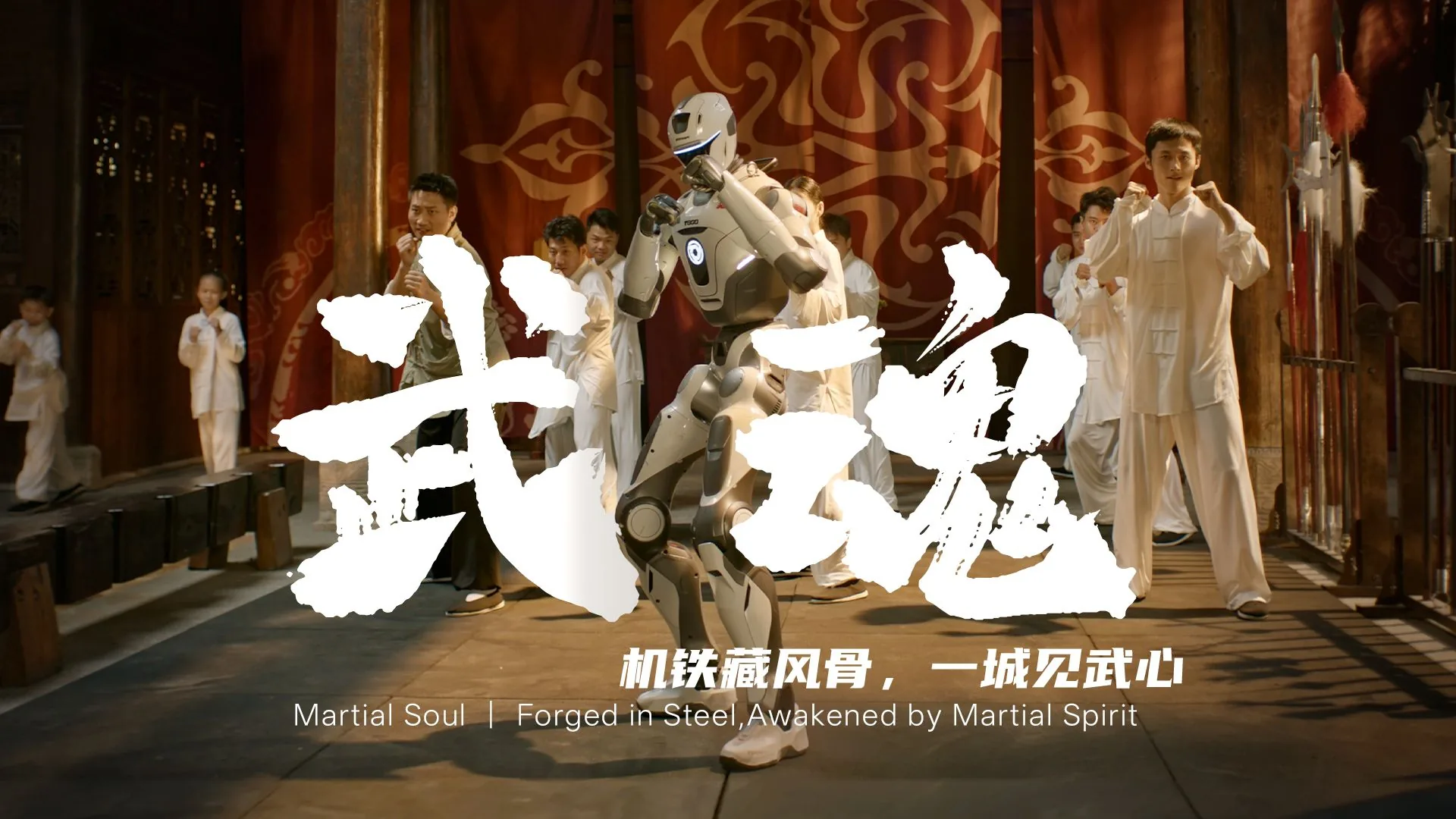
URKL is framed as a martial-arts story, not just a robot demo
EngineAI’s owned Bilibili feed presents URKL through a deliberate Chinese martial vocabulary. That supports an editorial reading of the league’s positioning; it does not prove audience reception or sporting quality.
H—CN1CN1
Signal boundaryFive owned uploads / 03–16 JulyConfirmed
Exact cover from EngineAI’s owned Bilibili upload. It documents the promotional title sequence, not audience reception or sporting quality.
RSSHubDiscoverytitle · date · author · link
≠
Direct APIsMeasurementviews · likes · followers
The snapshot combines systems only when their contribution is named. Discovery counts never become audience figures.
01 / The sequence
Five chapters before one fight night.
The official upload feed does not publish five interchangeable product clips. Its dated titles progress from origin and martial spirit to a search for the Way, the ready arena and final triumph.
Because the sequence is chronological and comes from an owned EngineAI account, it is meaningful evidence of brand framing. The titles are still promotional artefacts, not neutral descriptions of the event.
02 / The cultural layer
武 is doing strategic work.
The recurring martial vocabulary relocates robot combat inside a recognisable Chinese tradition of discipline, character and spectacle. The machine becomes a carrier of martial identity rather than a technical novelty shown for its own sake.
Donnie Yen’s gala appearance fits that frame, but this article does not infer a formal campaign brief or paid-endorsement scope that has not been published.
03 / Why it matters
English coverage misses the product being sold.
An English summary limited to robots punching each other strips out the organiser’s own narrative layer. Project H therefore records both the sporting contract and the cultural positioning, while keeping promotional language separate from verified results.